
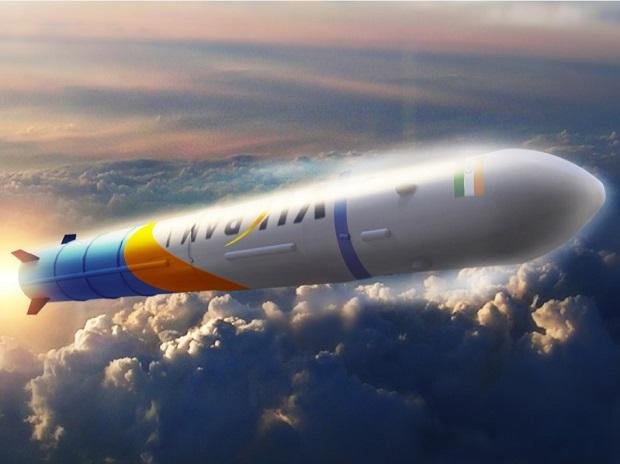
India has entered a new era in space exploration with the successful launch of Vikram-1, the country’s first privately developed orbital-class rocket. Developed by Hyderabad-based Skyroot Aerospace, the rocket lifted off from the Satish Dhawan Space Centre (SDSC), Sriharikota, under Mission Aagaman, marking a historic milestone for India’s rapidly growing private space sector.
The successful mission represents a breakthrough not only for Skyroot Aerospace but also for India’s vision of becoming a global leader in commercial space launches.
A Historic First for India’s Private Space Industry
The Vikram-1 mission is the first successful orbital launch by an Indian private company, demonstrating that Indian startups are now capable of designing, building, and launching advanced launch vehicles for commercial satellite deployment. The achievement follows Skyroot’s successful Vikram-S suborbital mission in 2022 and reflects the rapid growth of India’s private space ecosystem after the government’s space-sector reforms.
Mission Aagaman: A New Beginning
Named Mission Aagaman (“Arrival”), the launch carried multiple technology demonstration payloads from Indian and international customers into low Earth orbit.
Among the payloads were:
- Technology demonstration satellites
- Commercial customer payloads
- A micro-art payload
- A handwritten postcard from Prime Minister Narendra Modi bearing the message “Vande Mataram”, symbolizing India’s aspirations in space.
Advanced Rocket Technology
Vikram-1 is a small satellite launch vehicle designed to place payloads into Low Earth Orbit (LEO). The rocket features:
- Multiple solid-fuel propulsion stages
- A restartable liquid-fuel upper stage
- Lightweight carbon-composite structures
- Advanced avionics and guidance systems
- Cost-effective launch architecture for commercial missions
The vehicle has been developed to serve the growing global demand for dedicated small-satellite launches.
Prime Minister Congratulates Skyroot
Prime Minister Narendra Modi congratulated Skyroot Aerospace and described the mission as a “historic new frontier” for India’s space journey.
He praised the innovation and talent of India’s young engineers and emphasized that private companies will play a key role in achieving the country’s long-term space ambitions.
Why the Launch Matters
The success of Vikram-1 is expected to transform India’s commercial space industry by:
- Opening new opportunities for private launch providers.
- Strengthening India’s position in the global satellite launch market.
- Attracting international customers and investment.
- Accelerating innovation in space technology.
- Supporting India’s goal of becoming a major space economy over the next decade.
About Skyroot Aerospace
Founded in 2018 by former ISRO engineers Pawan Kumar Chandana and Naga Bharath Daka, Skyroot Aerospace has rapidly become one of India’s leading private space companies.
The company first made history with Vikram-S in 2022—the first privately built Indian rocket to reach space. The success of Vikram-1 now marks its entry into the orbital launch market, placing Skyroot among a growing group of commercial launch providers worldwide.
Looking Ahead
Following the success of Mission Aagaman, Skyroot Aerospace plans additional launches of the Vikram series while expanding its commercial launch services for customers around the world.
Industry experts believe this achievement will encourage greater private-sector participation in India’s space program and strengthen collaboration between government agencies, startups, and global partners.
Conclusion
The successful launch of Vikram-1 marks a defining moment in India’s space history. As the nation’s first privately developed orbital rocket, it showcases the growing capabilities of Indian innovation and signals the beginning of a new chapter in commercial space exploration. With Mission Aagaman successfully completed, India has taken another major step toward becoming a leading force in the global space economy.