Table of Contents
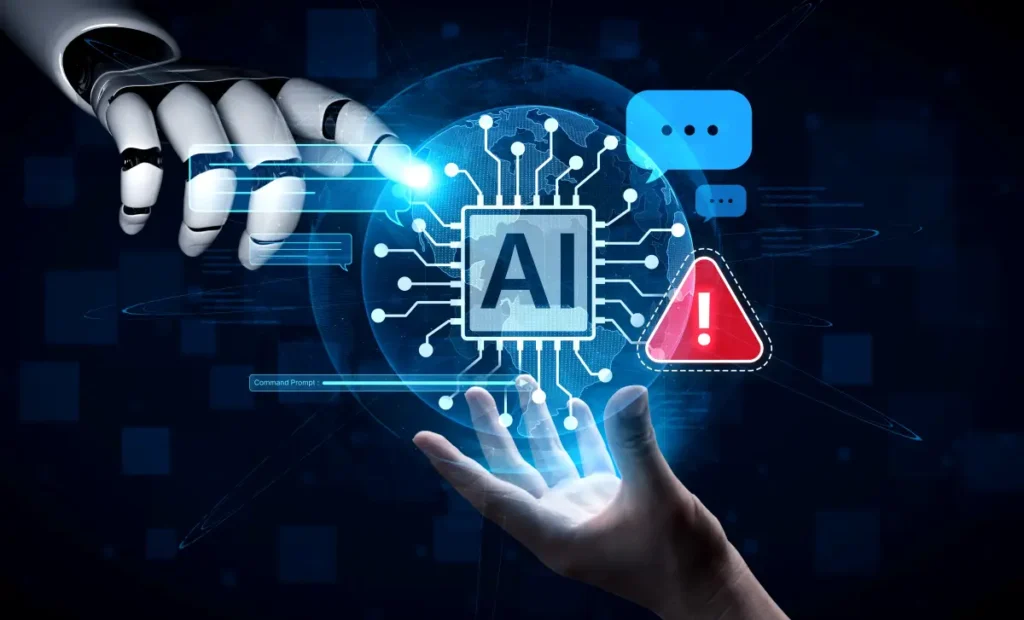
AI hallucinations happen when an artificial intelligence system generates information that sounds convincing but is inaccurate, unsupported, or completely made up.
You might ask an AI tool for a statistic, citation, historical fact, product feature, or explanation and receive a polished response that appears trustworthy.
The problem is that confidence does not guarantee accuracy.
Understanding AI hallucinations is therefore an important part of using generative AI responsibly, especially for research, work, finance, health, or other situations where incorrect information could matter.
What Are AI Hallucinations?
The term AI hallucinations generally describes situations where an AI system produces information that is not grounded in reliable facts.
For example, an AI assistant might:
Create a citation for a study that does not exist.
Provide an incorrect date for an event.
Describe a software feature that has not been released.
Invent statistics that sound realistic.
Confuse two people, companies, or products.
The answer may still be written clearly and confidently, which can make the error difficult to notice.
Why Do AI Hallucinations Happen?
Generative AI systems are designed to produce likely responses based on patterns learned from large amounts of data.
They do not automatically verify every sentence against a live database or authoritative source.
When information is unclear, incomplete, outdated, or outside the model’s reliable knowledge, the system may still attempt to produce an answer.
That can result in incorrect details.
Another cause is an unclear prompt.
If you ask:
Tell me everything about this new AI product.
the system may have to make assumptions about what product, version, or time period you mean.
A more precise prompt gives the system less room to guess.
For a broader framework on managing AI risks, you can also review guidance from the National Institute of Standards and Technology (NIST).
AI Hallucinations Can Sound Very Convincing
One of the biggest challenges with AI hallucinations is that incorrect information may not look incorrect.
Consider this fictional example:
A 2025 university study found that AI improved productivity by exactly 37%.
That statement sounds specific and authoritative.
But before using it, you should ask:
Does the study actually exist?
Which university conducted it?
How was productivity measured?
Who participated?
Can I find the original research?
A detailed answer is not necessarily a verified answer.
How to Reduce AI Hallucinations
You cannot completely eliminate incorrect AI responses, but you can reduce the risk.
Start by making your prompts specific.
Instead of:
Tell me about retirement savings.
try:
Explain the basic concept of retirement savings for a beginner. Clearly identify any figures, tax rules, or contribution limits that require current verification.
You can also ask the AI:
Tell me which claims in your response should be independently verified.
That does not guarantee accuracy, but it encourages a more cautious answer.
For more prompting techniques, Read our Prompt Engineering guide.
Verify Important AI Answers
Verification becomes especially important when an AI response contains:
Current prices, statistics, dates, financial information, medical information, legal information, government rules, software features, product specifications, or company announcements.
Whenever possible, go to the original source.
For example, if AI provides the price of software, check the company’s official pricing page.
If it gives a government rule, look for the relevant government website.
If it mentions a research paper, confirm that the paper exists and actually supports the claim.
Never Trust an AI Citation Without Checking It
AI-generated citations deserve particular attention.
A citation may contain a realistic-looking author, journal title, date, and study name while still being inaccurate.
Before including an AI-provided citation in your own article:
Open the source.
Confirm the title.
Check the author.
Check the publication date.
Make sure the source actually supports your statement.
If you cannot find the original source, do not present it as verified evidence.
When Are AI Hallucinations Most Risky?
The consequences depend on how you are using AI.
An incorrect movie recommendation may not matter much.
An incorrect medication instruction, financial regulation, legal requirement, or security configuration could matter considerably more.
The higher the stakes, the more important independent verification becomes.
AI is often most useful as a starting point for understanding and organizing information rather than as an unquestioned final authority.
Final Takeaway
AI hallucinations are incorrect or unsupported answers generated by AI systems, often presented in convincing language.
The easiest rule to remember is:
AI confidence is not the same as factual accuracy.
Use AI to understand ideas, generate questions, compare information, and organize research.
Then verify important claims using reliable sources.