
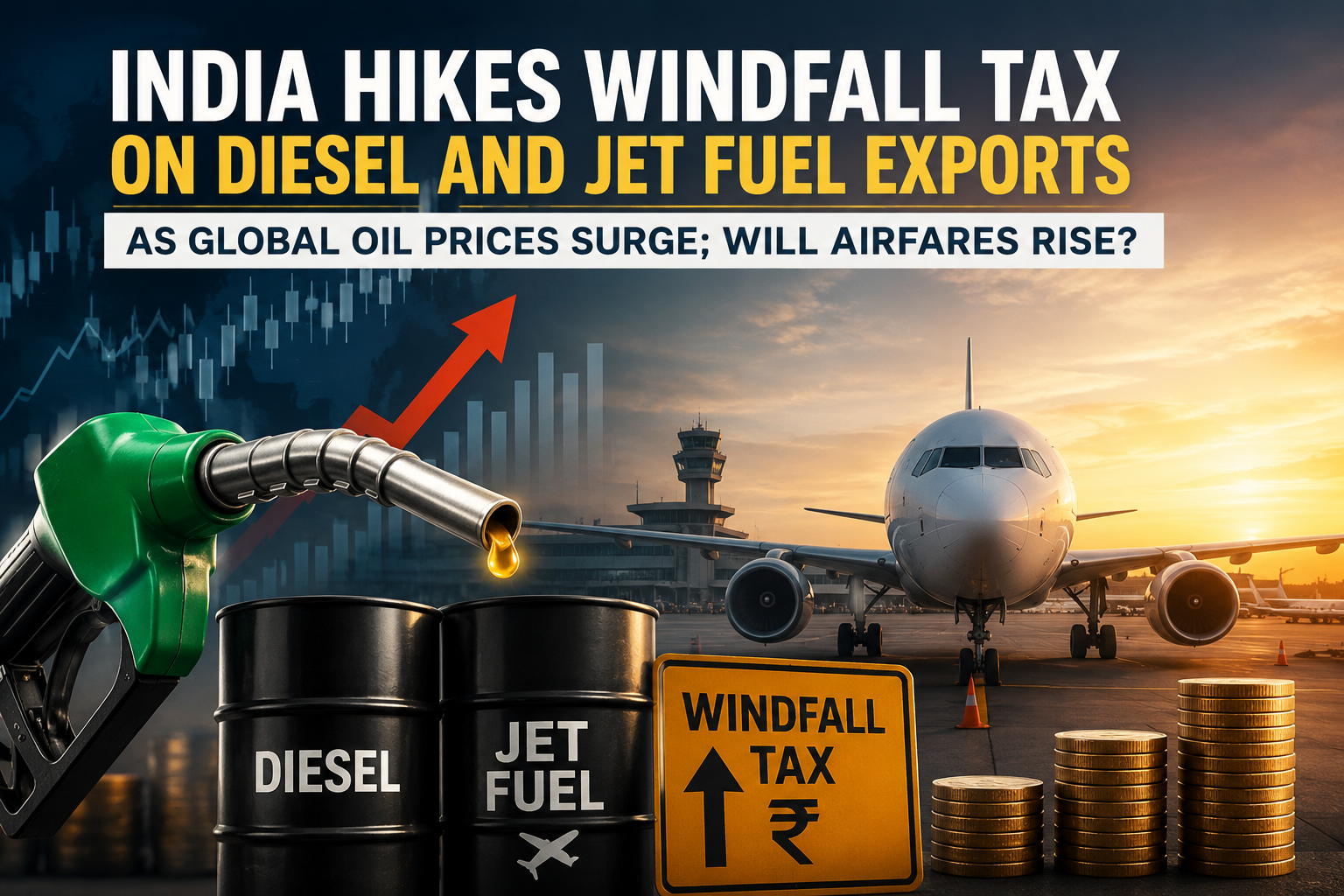
The Government of India has announced a significant increase in windfall taxes on diesel and aviation turbine fuel (ATF) exports following a sharp rise in global crude oil prices. The move comes amid escalating geopolitical tensions in West Asia, particularly involving the United States and Iran, which have disrupted energy markets worldwide.
The revised tax rates came into effect on July 16, 2026, and are aimed at ensuring adequate domestic fuel supplies while limiting the impact of volatile international markets on Indian consumers.
Windfall Tax on Diesel and ATF Increased
According to a notification issued by the Ministry of Finance, the export tax on diesel has been raised from ₹8.50 per litre to ₹15.50 per litre, while the tax on Aviation Turbine Fuel (ATF) has increased from ₹7.50 per litre to ₹14.50 per litre.
At the same time, the government has reduced the export tax on petrol from ₹4.00 per litre to ₹2.50 per litre.
Despite these changes, there will be no immediate increase in domestic petrol or diesel prices, as excise duties for fuel sold within India remain unchanged.
What Is a Windfall Tax?
A windfall tax is a special levy imposed on industries that earn unusually high profits due to external events such as geopolitical conflicts, supply shortages, or sharp increases in commodity prices rather than normal business growth.
Governments use this tax to:
- Prevent excessive profits during crises.
- Ensure sufficient domestic supply.
- Protect consumers from sudden price spikes.
- Stabilize inflation and energy markets.
Why Has the Government Increased Export Taxes?
Energy analysts believe the government’s primary objective is to ensure that Indian refineries prioritize domestic demand over exports.
When international fuel prices rise sharply, refiners have a stronger incentive to sell fuel overseas for higher profits. Without higher export taxes, this could reduce domestic availability and potentially lead to shortages and inflation.
By making exports less profitable, the government aims to:
- Maintain adequate fuel supplies within India.
- Stabilize domestic fuel prices.
- Control transportation and logistics costs.
- Reduce inflationary pressures on the economy.
Global Oil Prices Rise Amid West Asia Tensions
Global crude oil prices have climbed following renewed hostilities between the United States and Iran. Concerns over disruptions to oil supplies and shipping routes in the Strait of Hormuz have pushed energy prices higher across international markets.
The uncertainty has affected not only fuel prices but also shipping costs, aviation, and global trade.
Will Airfares Increase?
Although the government has increased export taxes to secure fuel availability for domestic airlines, airfares could still rise if global crude oil prices remain elevated.
Aviation Turbine Fuel is one of the largest operating costs for airlines. If international fuel prices continue to increase over an extended period, airlines may pass part of the additional cost on to passengers through higher ticket prices.
However, industry experts note that airfare changes will also depend on:
- Global crude oil prices.
- Airline competition.
- Passenger demand.
- Seasonal travel trends.
- Government policy measures.
Impact on Consumers
No Immediate Impact
- Petrol and diesel prices at Indian fuel stations remain unchanged.
- Domestic fuel availability is expected to remain stable.
- Transportation and freight costs are unlikely to rise immediately.
Possible Future Impact
- Airline ticket prices may increase if international oil prices remain high.
- Global shipping costs could continue to rise.
- Industries dependent on imported fuel may experience higher operating costs.
Conclusion
India’s decision to increase windfall taxes on diesel and ATF exports is a precautionary measure designed to protect domestic fuel supplies during a period of geopolitical uncertainty and rising global oil prices.
While the policy is expected to help stabilize local fuel markets, its long-term effectiveness will depend on developments in global energy markets and the evolving geopolitical situation in West Asia. Consumers are unlikely to see an immediate impact on petrol or diesel prices, though sustained increases in crude oil prices could eventually influence airfares and other transportation costs.