
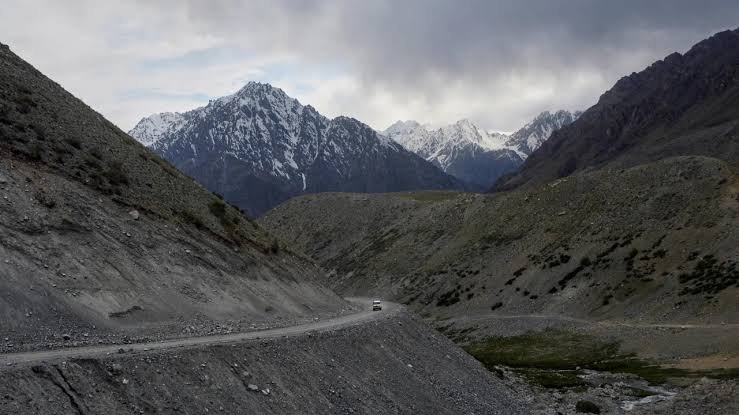
Pakistan has taken a significant political step after the Gilgit-Baltistan Assembly passed a resolution seeking to make the region the country’s fifth province. The development comes amid broader political tensions, including unrest in Balochistan, and has reignited debate over the constitutional and international status of the strategically important territory.
The proposal is expected to have implications for Pakistan’s domestic politics as well as its long-standing dispute with India over the wider Jammu and Kashmir region.
Assembly Passes Resolution
The Gilgit-Baltistan Assembly adopted a resolution calling on Pakistan’s federal government to grant the region full provincial status, including representation in the National Assembly and Senate. Supporters argue that provincial status would provide residents with greater constitutional rights and political representation.
If approved through the necessary constitutional process, Gilgit-Baltistan would formally become Pakistan’s fifth province after Punjab, Sindh, Khyber Pakhtunkhwa, and Balochistan.
Why Gilgit-Baltistan Matters
Gilgit-Baltistan occupies a strategically important location bordering China, Afghanistan, and India. It is also a key corridor for the China-Pakistan Economic Corridor (CPEC), making it economically and geopolitically significant.
Despite being administered by Pakistan for decades, the region has not enjoyed the same constitutional status as Pakistan’s four provinces. Its legal position has remained distinct due to the broader Kashmir dispute.
Constitutional and Diplomatic Challenges
Granting full provincial status would require constitutional changes within Pakistan. At the same time, the move is likely to draw international attention because India considers Gilgit-Baltistan part of the former princely state of Jammu and Kashmir, while Pakistan administers the territory and maintains that its constitutional reforms are an internal matter.
The issue remains closely linked to the wider Kashmir dispute, which both countries claim in part and has been the subject of decades of diplomatic disagreement.
Political Context
The resolution follows recent Gilgit-Baltistan elections in which the Pakistan Peoples Party (PPP) emerged as the largest party, leading to the formation of a coalition government. Opposition parties had questioned aspects of the election process.
The timing has also attracted attention because it coincides with political unrest elsewhere in Pakistan, particularly in Balochistan. However, claims circulating online that Pakistan has “lost Balochistan” or that Balochistan has formally declared independence remain unverified, with no official confirmation from Pakistani authorities.
Why This Development Is Important
If the proposal advances, it could:
- Give Gilgit-Baltistan representation in Pakistan’s Parliament.
- Change the region’s constitutional relationship with Islamabad.
- Influence the future political debate surrounding the Kashmir dispute.
- Impact regional geopolitics involving India, Pakistan, and China.